Artificial Intelligence in Modern Trade

Artificial Intelligence in Modern Trade

Artificial Intelligence (AI) is transforming the modern trade landscape globally, and in countries like Bangladesh, it’s beginning to make a significant impact on retail operations, enhancing customer experiences and optimizing supply chains. Modern trade refers to organized retail formats such as supermarkets, hypermarkets, and e-commerce platforms, which can benefit immensely from AI technologies. Here’s how AI is influencing modern trade:

1. Enhanced Customer Experience

  • Personalized Recommendations: AI-powered recommendation engines analyze customer behavior, purchase history, and preferences to provide personalized product suggestions. This is commonly seen in online platforms like Amazon or Chaldal, where AI algorithms drive product recommendations that match customer preferences.
  • Chatbots and Virtual Assistants: AI-powered chatbots provide real-time customer service on e-commerce websites and mobile apps. For instance, a customer looking for specific grocery items on an online platform can interact with a chatbot to receive recommendations or ask questions about product availability.
  • Voice Commerce: With the rise of AI-driven voice assistants like Amazon’s Alexa and Google Assistant, consumers can now shop using voice commands. Though this is more prevalent in developed markets, it’s slowly gaining ground in regions like Bangladesh as well.

2. Inventory Management and Demand Forecasting

  • Automated Inventory Tracking: AI helps modern retailers optimize their inventory levels. Using data from previous sales patterns, AI can predict which products are likely to be in high demand, helping retailers manage stock more efficiently. For example, Shwapno and Meena Bazar can use AI to ensure that fast-moving consumer goods (FMCGs) are always available while minimizing overstocking of less popular items.
  • Demand Forecasting: AI-powered algorithms analyze various factors such as seasonal trends, consumer buying behavior, and even weather patterns to forecast demand more accurately. This helps retailers plan ahead, reducing waste in perishable items and ensuring product availability during peak shopping periods.
  • Dynamic Pricing: AI enables dynamic pricing strategies, where the system adjusts product prices in real-time based on demand, competition, and stock levels. This can help retailers stay competitive while maximizing profitability.

3. Supply Chain Optimization

  • AI in Logistics and Distribution: AI helps modern trade outlets streamline logistics by optimizing routes for delivery and reducing transportation costs. Retailers can use AI to track delivery vehicles, predict traffic conditions, and optimize delivery routes, ensuring that products reach stores or customers more efficiently.
  • Smart Warehousing: AI-powered robots and automated systems can manage warehouses with greater efficiency. They can track inventory in real-time, automate the restocking process, and ensure that products are packed and shipped quickly. This is especially beneficial for large e-commerce platforms with extensive logistics needs.
  • Supply Chain Transparency: AI can help retailers track the entire supply chain from farm to shelf. This ensures that products, particularly perishables like fresh produce, are handled properly, enhancing food safety and reducing spoilage.

4. AI-Powered Marketing and Sales

  • Targeted Marketing Campaigns: AI analyzes customer data to create targeted marketing campaigns. Retailers can segment their customers based on purchase patterns, demographics, and preferences, sending personalized promotions and offers through email, SMS, or in-app notifications. For instance, a supermarket chain like Agora could use AI to offer discounts to frequent buyers of specific products based on their past purchases.
  • Customer Behavior Analysis: AI tools help retailers understand consumer shopping habits and preferences, identifying trends that can be used to enhance in-store experiences or promote products more effectively. This can be used to improve store layouts, create better product assortments, and design loyalty programs.

5. Automated Checkouts and Smart Stores

  • AI-Powered Checkout Systems: AI is transforming the checkout process with automated systems like Amazon Go stores, where customers can pick up items and leave without waiting in a checkout line. AI-powered sensors and computer vision track what customers purchase, and payments are automatically processed through their mobile apps. While this concept is still emerging in Bangladesh, it represents the future of shopping experiences.
  • In-Store Robots: AI-powered robots are being introduced in modern trade outlets to assist with in-store tasks, such as stocking shelves, guiding customers to specific products, or even offering product information. These robots enhance operational efficiency and customer engagement.

6. Fraud Detection and Security

  • AI-Driven Fraud Detection: In the e-commerce space, AI is critical in detecting fraudulent transactions. By analyzing transaction patterns, AI can identify potential fraud and alert retailers or payment platforms. This is particularly useful for large online platforms where numerous transactions occur every day.
  • AI-Powered Surveillance: Modern retail stores are increasingly using AI-based surveillance systems to monitor store activities, prevent theft, and ensure safety. AI can also analyze shopper behavior, providing insights into in-store traffic and customer preferences.

7. Customer Sentiment Analysis

  • AI in Social Listening: Retailers use AI to monitor social media and customer reviews to understand consumer sentiment about their products or brands. This allows companies to respond quickly to negative feedback, improve products, and create strategies to enhance brand loyalty.
  • Product Feedback and Reviews: AI can analyze vast amounts of customer reviews and feedback to detect patterns, highlighting which products are receiving the most positive or negative comments. Retailers can then use this data to make informed decisions about stocking, promoting, or discontinuing certain products.

8. Sustainability and Waste Reduction

  • AI for Sustainable Practices: Retailers can leverage AI to promote sustainability by reducing food waste, optimizing energy consumption, and managing resources efficiently. For example, AI-driven analytics can track which perishable goods are approaching their expiry date, enabling stores to offer promotions or discounts to sell them before they go to waste.
  • Eco-Friendly Supply Chain Management: AI can help retailers make their supply chains more eco-friendly by suggesting optimal transportation routes that reduce fuel consumption or identifying suppliers who follow sustainable practices.

9. AI in E-commerce

  • Predictive Analytics: AI uses predictive analytics in e-commerce platforms to recommend products, predict consumer demand, and streamline online marketing efforts. AI algorithms on platforms like Chaldal or Shwapno Online can personalize shopping experiences by predicting what items customers might need based on their previous purchases or search history.
  • AI in Delivery Optimization: E-commerce platforms use AI to optimize delivery routes and schedules, ensuring fast and cost-effective shipping. This is particularly important for companies dealing with fresh produce and perishable goods, where timely delivery is crucial.

10. Challenges in AI Adoption

  • Cost of Implementation: Implementing AI solutions can be expensive, especially for smaller retail chains and businesses. The cost of AI infrastructure, maintenance, and skilled personnel can be prohibitive for some retailers in Bangladesh.
  • Data Privacy and Security: The use of AI relies heavily on data collection, raising concerns about data privacy and security. Retailers must ensure that they have robust data protection policies in place to avoid breaches and maintain customer trust.
  • Infrastructure and Expertise: In Bangladesh, many retailers face infrastructure challenges, including reliable internet access and technical expertise. These issues can hinder the widespread adoption of AI technologies.

Conclusion

AI is revolutionizing modern trade by offering innovative solutions that enhance customer experience, optimize operations, and drive profitability. In Bangladesh, while AI adoption is still in its early stages, it holds tremendous potential for the retail sector, especially with the rapid growth of e-commerce and organized retail formats. As technology continues to evolve, AI will play an even more significant role in shaping the future of food retail, supermarkets, and e-commerce in the country.

By Ahmed Shoyeb Iqbal

Food Retail in Bangladesh

Food Retail in Bangladesh

Food retail in Bangladesh is a dynamic and evolving sector, driven by changing consumer behavior, urbanization, and rising disposable incomes. The food retail market can be broadly categorized into traditional retail (wet markets, small grocery shops) and modern retail (supermarkets, hypermarkets, and online platforms). While traditional retail still dominates, modern food retail is gaining traction, especially in urban areas. Here’s an overview of food retail in Bangladesh:

1. Traditional Food Retail

  • Small Grocery Shops (Kirana Stores): These are the most common form of food retail in Bangladesh. Located in almost every neighborhood, these stores sell essential food items such as rice, lentils, spices, cooking oil, and packaged goods. Customers value these stores for their proximity, convenience, and credit facilities.
  • Wet Markets (Bazars): Open-air markets are another critical part of food retail in Bangladesh. These markets typically sell fresh produce, including fruits, vegetables, fish, meat, and poultry. Wet markets are popular because of the availability of fresh, locally sourced products. Major wet markets, such as Karwan Bazar and New Market in Dhaka, are key hubs for food purchases.
  • Street Vendors: In both rural and urban areas, food retailing by street vendors is widespread. They sell fresh produce, snacks, and cooked foods at affordable prices and are a vital part of the informal economy.

2. Modern Food Retail

  • Supermarkets and Hypermarkets: Over the last two decades, modern food retail outlets have grown rapidly in cities like Dhaka, Chittagong, Sylhet, and Khulna. These outlets offer a clean, organized shopping environment, fixed pricing, and a wider variety of food items, including fresh produce, packaged goods, frozen foods, and imported products. Key players include:
    • Shwapno: The largest supermarket chain in Bangladesh, with over 200 outlets across the country. Shwapno offers a wide variety of fresh produce, groceries, and household items, appealing to middle-class and upper-middle-class consumers.
    • Meena Bazar: A well-established supermarket chain that focuses on high-quality food products, particularly fresh produce, groceries, and imported goods. Meena Bazar operates in major cities and has a strong brand presence in the premium food retail market.
    • Agora: One of the first supermarket chains in Bangladesh, Agora is known for its commitment to food safety and quality, especially fresh produce and meat products.
    • Unimart: A high-end hypermarket catering to affluent customers, Unimart offers premium groceries, imported food items, and household goods, including a wide range of organic and specialty products.
  • Convenience Stores: Convenience stores are also growing in popularity in urban centers. These stores offer basic food items, snacks, and ready-to-eat foods, catering to consumers looking for quick, convenient purchases.
  • Online Food Retail:

    E-commerce has rapidly expanded in Bangladesh, particularly in the food retail sector. Online grocery platforms offer home delivery services, catering to the growing demand for convenience. Key players include:

    • Chaldal: The largest online grocery platform in Bangladesh, offering a wide range of fresh food, groceries, and household products. It operates mainly in Dhaka and Chittagong, with fast delivery services that appeal to busy urban consumers.
    • Shwapno Online: Shwapno’s online platform allows customers to order groceries and fresh food for home delivery, combining the offline supermarket’s product range with the convenience of e-commerce.
    • MeenaClick: The online grocery shopping platform of Meena Bazar offers a selection of groceries, fresh produce, and household products, with delivery services available in Dhaka and other cities.
    • Foodpanda Groceries: Expanding beyond restaurant delivery, Foodpanda now offers grocery delivery services, partnering with local stores to provide fresh food and essentials to urban households.

3. Consumer Behavior and Trends in Food Retail

  • Urbanization: With more people moving to urban centers, the demand for modern food retail formats such as supermarkets and hypermarkets is increasing. Urban consumers are more inclined to value convenience, hygiene, and product variety.
  • Rising Middle-Class Incomes: As disposable incomes increase, middle- and upper-middle-class consumers are willing to spend more on quality food, branded products, and premium offerings, driving the growth of modern retail outlets.
  • Health and Wellness Consciousness: There is a growing awareness of healthy eating and food safety. Consumers are increasingly opting for organic products, healthier cooking oils, and packaged goods with transparent labeling. Supermarkets and online retailers are capitalizing on this trend by stocking a variety of health-oriented food items.
  • Demand for Imported Foods: With rising incomes and greater exposure to global trends, demand for imported and international food products is increasing, especially in urban areas. Supermarkets often stock a wide range of international brands, packaged foods, and specialty items.
  • Convenience and Online Shopping: The busy lifestyles of urban consumers are pushing the demand for online grocery shopping and quick home deliveries. The pandemic accelerated this trend, with more consumers opting for online platforms like Chaldal and Shwapno Online to avoid crowded markets.

4. Challenges Facing Food Retail

  • Supply Chain Inefficiencies: While modern retail is expanding, many food retailers still face challenges with sourcing and maintaining a reliable supply chain. Inadequate cold storage facilities, transportation issues, and inconsistent product availability can affect both traditional and modern retailers.
  • Competition from Traditional Retail: Despite the growth of supermarkets, traditional food retailers, including kirana stores and wet markets, continue to dominate in many parts of Bangladesh. Their proximity, personalized service, and competitive prices remain attractive to consumers.
  • Consumer Trust and Habits: Many consumers, especially in rural and semi-urban areas, still prefer to buy fresh produce and food items from local markets or familiar vendors. These purchasing habits are deeply ingrained and can be a barrier for the growth of modern retail formats.
  • Regulatory and Quality Control Issues: Food safety regulations are often inconsistent, and enforcement can be lax. Ensuring consistent quality control, particularly in the handling of fresh produce and meat products, is a challenge for both traditional and modern food retailers.

5. Regulatory Environment

  • The government plays an important role in regulating food prices, particularly for essential commodities like rice, wheat, and cooking oil. Price controls are often imposed during major festivals or periods of inflation to ensure affordability for the general population.
  • Food safety regulations have been strengthened in recent years, with initiatives aimed at improving food quality, handling, and labeling standards. However, challenges remain in terms of enforcement and monitoring.

6. Future Prospects for Food Retail

  • Growth of Supermarkets and Hypermarkets: With the rising demand for convenience and quality, the supermarket sector is expected to expand further in urban areas. Leading chains like Shwapno, Meena Bazar, and Agora are likely to open more outlets and expand their product offerings to meet consumer demand.
  • E-commerce Growth: Online food retail will continue to grow, particularly in urban areas where internet penetration is higher, and consumers are more tech-savvy. The convenience of online shopping, coupled with home delivery services, is becoming an essential part of the food retail landscape.
  • Expansion to Smaller Cities: As disposable incomes rise in smaller cities and towns, food retailers are expected to expand into these areas. Supermarkets and online platforms will likely target tier-2 and tier-3 cities in the coming years.
  • Sustainability: There is a growing trend toward sustainable practices in food retail, with consumers showing increasing interest in locally sourced, organic, and eco-friendly products. Retailers are beginning to incorporate these options to meet the demand for sustainable and ethical food consumption.

Conclusion

Food retail in Bangladesh is experiencing a shift from traditional markets to modern retail formats, driven by urbanization, rising incomes, and changing consumer preferences. While traditional food retail remains dominant, supermarkets, hypermarkets, and online platforms are gaining popularity, particularly in urban areas. The sector’s future growth will be shaped by continued urban expansion, the rise of e-commerce, and an increasing focus on health, wellness, and sustainability.

By Ahmed Shoyeb Iqbal

Super Shop in Bangladesh

Super Shop in Bangladesh

Super shops in Bangladesh, also known as supermarkets, represent a growing segment of the retail landscape, especially in urban centers like Dhaka, Chittagong, and Sylhet. These stores offer a modern, convenient, and hygienic shopping experience, catering primarily to middle- and upper-middle-class consumers. Here’s an overview of the super shop culture in Bangladesh:

1. Definition of Super Shops

  • Super shops in Bangladesh are self-service retail outlets that sell a wide variety of products, including groceries, fresh produce, household items, personal care products, and in some cases, apparel and electronics.
  • These stores operate on fixed pricing models, offering an alternative to traditional open markets and kiryana stores where prices may vary, and haggling is common.

2. Key Players in the Super Shop Market

  • Shwapno: The largest supermarket chain in Bangladesh, Shwapno operates more than 200 stores across the country, offering a variety of products, from fresh food and groceries to household essentials. It caters to urban customers and offers both physical and online shopping options.
  • Meena Bazar: Another prominent name in the super shop industry, Meena Bazar operates in major cities and is known for its premium products and a wide selection of both local and imported items. The chain focuses on food safety and quality, appealing to middle- and upper-class customers.
  • Agora: One of the first modern retail chains in Bangladesh, Agora is recognized for offering high-quality, fresh food products in clean and organized stores. Its focus on food safety has made it popular among health-conscious consumers.
  • Unimart: Positioned as a high-end supermarket, Unimart offers premium products, including a wide range of imported goods. It caters to more affluent consumers, offering groceries, household items, electronics, and lifestyle products.
  • Prince Bazar: A smaller chain, Prince Bazar offers a similar product range as the bigger chains but operates on a more localized scale, appealing to customers who prefer a more neighborhood-oriented shopping experience.

3. Characteristics of Super Shops

  • Wide Product Range: Super shops provide a diverse selection of products, from fresh fruits and vegetables to imported snacks, beverages, dairy products, and frozen foods. They often stock personal care items, cleaning supplies, and household necessities.
  • Hygienic Shopping Environment: One of the major draws of super shops is the clean and organized environment they provide compared to traditional markets. This is particularly important for urban customers who are increasingly health-conscious and concerned about food safety.
  • Convenience: Super shops provide a one-stop shopping experience, where customers can buy a variety of items in one visit, without the need to visit multiple vendors.
  • Fixed Pricing: Unlike traditional shops where haggling is common, super shops operate on fixed prices, ensuring price transparency. Customers generally trust these outlets for consistent pricing.

4. Consumer Trends and Preferences

  • Urbanization: The rapid expansion of urban areas in Bangladesh has fueled the demand for super shops, as city dwellers increasingly value the convenience, hygiene, and variety offered by these outlets.
  • Time-Saving: As more people lead busy lives, particularly in dual-income households, the ability to shop for all household needs in one place is a major draw for super shops.
  • Health and Safety: Since the COVID-19 pandemic, there has been a growing emphasis on health and safety, with more consumers gravitating towards super shops that provide a cleaner and more hygienic shopping environment than traditional open-air markets.
  • Brand Consciousness: Middle- and upper-middle-class consumers are increasingly brand-conscious, seeking both local and international brands for their groceries, personal care products, and household goods. Super shops cater to this demand by stocking a mix of well-known and premium brands.

5. Challenges for Super Shops

  • Competition from Traditional Markets: Despite the growth of super shops, traditional markets and small neighborhood shops still dominate much of the retail landscape in Bangladesh, particularly in rural and semi-urban areas. These traditional stores often have lower operating costs and can offer competitive prices.
  • Supply Chain and Logistics: Super shops, especially those dealing with fresh produce and perishables, face challenges in maintaining efficient supply chains. Managing inventory to avoid stockouts or spoilage can be difficult, particularly in a country with infrastructure limitations.
  • Consumer Loyalty: Many consumers, especially in rural and semi-urban areas, remain loyal to their local kiryana stores due to personal relationships with shopkeepers, proximity, and the ability to buy on credit.

6. Online Integration

  • Many super shop chains have embraced e-commerce to reach more consumers, especially in cities where internet penetration and smartphone use are high.
  • Shwapno Online and MeenaClick (Meena Bazar’s online store) allow customers to shop for groceries and household items from the convenience of their homes, with delivery services across major cities. This has helped them tap into the growing online grocery shopping trend, particularly after the COVID-19 pandemic.
  • Chaldal: While not a traditional super shop, Chaldal is the largest online grocery platform in Bangladesh, competing with physical super shops by offering a wide range of products and rapid delivery services.

7. Impact of the COVID-19 Pandemic

  • The pandemic accelerated the shift toward modern retail formats, including super shops, as consumers became more concerned about hygiene and physical distancing. Super shops implemented safety measures such as sanitizing stores, maintaining social distancing, and providing delivery services, which helped boost their appeal.
  • Online shopping for groceries surged during the pandemic, with platforms like Chaldal and the online arms of super shops seeing significant growth in order volumes.

8. Future of Super Shops in Bangladesh

  • Expansion into Smaller Cities: As disposable incomes rise in smaller cities and towns, there is potential for the expansion of super shops beyond the major metropolitan areas. Chains like Shwapno and Meena Bazar are expected to explore more opportunities in tier-2 and tier-3 cities.
  • Technology Integration: The use of technology in inventory management, customer service, and delivery logistics will become increasingly important for the growth of super shops. Mobile apps, digital payments, and data-driven customer loyalty programs are likely to become more prevalent.
  • Sustainability: As consumers become more environmentally conscious, super shops may increasingly adopt sustainable practices, such as reducing plastic packaging, promoting local produce, and incorporating eco-friendly products into their offerings.

Conclusion

Super shops in Bangladesh are playing a crucial role in the transformation of the retail sector, particularly in urban areas. They offer a modern, convenient, and hygienic shopping experience that appeals to a growing middle class with rising disposable incomes and a preference for quality, convenience, and brand variety. While super shops face challenges such as competition from traditional markets and logistical issues, the sector is poised for further growth, especially with increasing online integration and expansion into smaller cities.

By Ahmed Shoyeb Iqbal

Modern Trade in Bangladesh

Modern Trade in Bangladesh

Modern Trade in Bangladesh: Modern trade in Bangladesh refers to the structured, organized retail sector that includes supermarkets, hypermarkets, convenience stores, and chain retail outlets. Over the past decade, modern trade has grown significantly, especially in urban areas, thanks to changing consumer preferences, rising disposable incomes, and the increasing urbanization of the population. Below is an overview of modern trade in Bangladesh:

1. Definition of Modern Trade

  • Modern Trade is characterized by organized, large-scale retail businesses that use formalized supply chain and inventory management systems, offer a wider variety of products, and provide a standardized shopping experience. This contrasts with traditional trade, which includes informal, small-scale operations such as local kirana shops and open-air markets.

2. Key Features of Modern Trade

  • Standardized Pricing: Unlike traditional markets where prices are often negotiable, modern trade offers fixed prices, which ensures transparency and consistency for customers.
  • Wide Range of Products: Modern trade outlets provide a variety of products, including groceries, personal care items, household goods, apparel, electronics, and more.
  • Customer Convenience: Supermarkets and hypermarkets offer a clean, organized shopping environment, self-service options, and centralized locations for a broad range of products, which cater to the growing preference for one-stop shopping.
  • Supply Chain Efficiency: Modern trade uses efficient supply chains, often incorporating technology for inventory management, logistics, and distribution, ensuring product availability and minimizing stockouts.

3. Major Players in Modern Trade

  • Shwapno: Currently the largest retail chain in Bangladesh, Shwapno operates supermarkets across major cities. It offers a variety of groceries, fresh produce, and household goods, appealing to middle- and upper-middle-class customers.
  • Meena Bazar: A key player in the modern grocery retail space, Meena Bazar offers premium-quality food products. Other household essentials through its outlets and online platform.
  • Agora: One of the pioneers in the modern trade sector in Bangladesh, Agora focuses on food safety and offers fresh produce, meat, groceries, and a wide range of FMCG products.
  • Unimart: Targeting higher-income customers, Unimart is a hypermarket format that offers premium products, including imported goods, electronics, clothing, and food.

4. Growth Drivers of Modern Trade in Bangladesh

  • Urbanization and Lifestyle Changes: With the rapid expansion of urban areas like Dhaka, Chittagong, and Sylhet, more consumers are drawn to the convenience, hygiene, and product variety offered by modern trade outlets.
  • Rising Middle-Class Income: Bangladesh’s growing middle class, with increased disposable incomes and higher expectations for quality and convenience, is fueling demand for modern retail formats.
  • Women’s Workforce Participation: As more women enter the workforce, families increasingly prefer the convenience of modern retail outlets, where a variety of products can be bought in a single trip.
  • Consumer Awareness: Exposure to global retail trends and an increasing focus on hygiene and food safety have made consumers more inclined to shop at modern trade outlets, which provide better control over product quality and standards.

5. Challenges Facing Modern Trade

  • Competition from Traditional Trade: Small neighborhood shops and wet markets remain dominant in many parts of Bangladesh, particularly in rural and semi-urban areas. These shops often offer lower prices and personalized service, which can make it difficult for modern trade outlets to compete.
  • High Operating Costs: The cost of setting up and operating modern retail stores, particularly in prime urban locations, can be high due to high rents, utility costs, and the need for advanced inventory systems.
  • Supply Chain Constraints: Efficient supply chain management remains a challenge, especially for perishable items like fresh fruits, vegetables, fish, and meat. Issues such as inadequate cold storage and transportation infrastructure can lead to supply disruptions.
  • Consumer Loyalty to Traditional Markets: Many consumers still prefer traditional markets due to their proximity, the ability to negotiate prices, and a long-standing habit of buying fresh products from known vendors.

6. Impact of E-commerce on Modern Trade

  • Omnichannel Strategies: Many modern trade retailers are integrating e-commerce into their business models. For example, Shwapno and Meena Bazar have launched online platforms that allow customers to shop for groceries and household items online, with home delivery or pick-up options.
  • Chaldal: As one of Bangladesh’s largest online grocery platforms, Chaldal has created significant competition for brick-and-mortar retailers. Its ability to deliver groceries quickly to urban households has driven consumer convenience to new heights.
  • Online Payment and Delivery: The increased penetration of smartphones and digital payment platforms such as bKash and Nagad has made online shopping more accessible, driving growth in both physical and digital retail.

7. Regulatory Environment

  • The government plays an important role in the modern retail sector by regulating prices for essential commodities, especially during major festivals such as Ramadan. It also ensures compliance with food safety standards, which has become increasingly important to consumers.
  • In recent years, regulatory efforts have focused on improving supply chain infrastructure, reducing import duties on essential products, and encouraging foreign direct investment (FDI) in the retail sector.

8. Consumer Behavior and Trends in Modern Trade

  • Brand Loyalty: Consumers shopping in modern retail outlets are more brand-conscious and tend to prefer quality over price. They often look for a wider variety of branded products, both local and international.
  • Health Consciousness: There is a growing trend towards purchasing healthier, organic, and hygiene-focused products. Consumers are increasingly interested in nutritional labels, product sourcing, and food safety, prompting retailers to stock more premium, health-oriented products.

9. Future Prospects for Modern Trade

  • Expansion to Smaller Cities: While Dhaka and Chittagong have the highest concentration of modern trade outlets. Smaller cities and towns are expected to see more modern retail formats as infrastructure improves and income levels rise.
  • Technology Adoption: The use of technology, including data analytics, mobile apps. And cashless payment systems, is set to shape the future of modern trade. Retailers are increasingly adopting customer loyalty programs, in-store promotions, and personalized marketing strategies to enhance the shopping experience.
  • Sustainability and Eco-Friendly Practices: As global sustainability concerns gain traction, some modern trade retailers in Bangladesh. Adopting eco-friendly packaging and promoting local, sustainable products to attract environmentally conscious consumers.

Conclusion

Modern trade in Bangladesh is growing steadily, particularly in urban areas where consumers demand greater convenience, quality, and choice. As the economy continues to develop and consumer preferences shift toward modern retail formats. The sector is likely to expand further. Nonetheless, with rising incomes, urbanization, and technological integration, the future for modern trade in Bangladesh appears promising.

By Ahmed Shoyeb Iqbal

Organized Retail in Bangladesh

Organized Retail in Bangladesh

Organized retail in Bangladesh is gradually gaining momentum, driven by increasing urbanization, rising incomes, and changing consumer behavior. Although traditional retail (such as open markets and small local shops) still dominates, the country has seen steady growth in modern, organized retail formats such as supermarkets, shopping malls, and branded retail chains. Here’s an overview of the organized retail sector in Bangladesh:

1. Key Characteristics of Organized Retail

  • Standardized Practices: Organized retail refers to retailers operating with standardized and professional practices, including proper supply chain management, pricing strategies, modern store layouts, and customer service.
  • Variety of Goods: These stores offer a wide range of products, including groceries, apparel, electronics, household items, and lifestyle products, often under one roof.
  • Chain Stores: Many organized retail players have multiple outlets across cities, ensuring consistency in quality, pricing, and service.

2. Types of Organized Retail

  • Supermarkets and Hypermarkets:
    • Chains like Shwapno, Meena Bazar, Agora, and Unimart are leading the organized retail scene, particularly in grocery and household goods.
    • These stores focus on providing customers with a clean shopping environment, fixed prices, and a wide selection of local and imported products.
    • Supermarkets are primarily focused on food and FMCG (fast-moving consumer goods), while larger hypermarkets (like Unimart) also offer clothing, electronics, and home goods.
  • Shopping Malls:
    • Jamuna Future Park in Dhaka, one of the largest malls in South Asia, symbolizes the growing trend of shopping malls in Bangladesh. Other prominent malls include Bashundhara City and Metro Shopping Mall.
    • These malls house various organized retail stores, including international brands, local fashion brands, electronics, and dining options, providing an all-in-one shopping and entertainment experience.
  • Apparel and Lifestyle Brands:
    • Bangladesh’s textile and apparel sector is world-renowned, and brands like Aarong, Yellow, Cats Eye, Kay Kraft, and Dorji Bari operate organized retail outlets across the country.
    • International brands such as Levi’s, H&M, and Adidas are also entering the market through organized retail stores.
  • Electronics and Appliances:
    • Major retail chains such as Rangs Electronics, Transcom Digital, and Best Electronics operate organized retail outlets across Bangladesh, offering a range of home appliances, smartphones, computers, and other electronics.

3. Growth Drivers

  • Urbanization: The rapid growth of cities like Dhaka, Chittagong, and Sylhet has fueled the demand for modern retail formats. Urban consumers are increasingly drawn to organized retail due to convenience, quality, and variety.
  • Rising Middle Class: As income levels rise, particularly among the urban middle class, consumers are willing to spend more on quality products, brands, and an improved shopping experience.
  • Changing Lifestyles: The shift towards nuclear families, a busier lifestyle, and increased exposure to global retail trends (thanks to international travel and social media) are pushing consumers toward organized retail formats.
  • Foreign Investment: Bangladesh’s growing economy and large population have attracted foreign investment in the retail sector, leading to an influx of international brands and retail chains.

4. Online Retail and E-commerce

  • While still in its early stages compared to other South Asian markets, online retail is growing rapidly in Bangladesh. Platforms like Daraz, Pickaboo, and Evaly (prior to its downfall) have created a robust online retail ecosystem.
  • Several organized brick-and-mortar retailers, like Shwapno and Meena Bazar, have also launched online stores to cater to the growing demand for e-commerce.
  • Chaldal, primarily focused on groceries, has become a major player in online organized retail.

5. Challenges Facing Organized Retail

  • High Real Estate Costs: The cost of real estate in prime urban locations is high, making it expensive for organized retailers to expand their physical presence.
  • Supply Chain Inefficiencies: Despite improvements, many organized retailers still face challenges with logistics and supply chain management, especially in terms of sourcing fresh produce and managing inventory efficiently.
  • Competition from Informal Sector: Traditional markets and informal retail, which operate with lower overheads and greater flexibility, remain tough competitors for organized retail, especially in semi-urban and rural areas.
  • Regulatory Hurdles: Inconsistent regulations, such as taxes and import duties, sometimes hinder the smooth operation of organized retail chains, especially for those dealing in imported goods.

6. Consumer Preferences and Trends

  • Convenience and Experience: Consumers increasingly value the convenience of organized retail, where they can shop for a variety of products under one roof. Additionally, the in-store experience—air-conditioned environments, clean facilities, and organized product displays—is an attraction.
  • Brand Consciousness: With greater exposure to global trends and brands, Bangladeshi consumers, especially younger generations, are becoming more brand-conscious, driving demand for both local and international brands.
  • Omnichannel Shopping: Many organized retailers are now adopting an omnichannel approach, where customers can browse products online and either have them delivered to their homes or pick them up in-store.

7. Future Prospects

  • Expansion into Tier 2 Cities: As Dhaka and Chittagong become more saturated, organized retailers are expanding into other urban centers like Khulna, Sylhet, Rajshahi, and Barishal, where middle-class populations are growing.
  • Technology Integration: The use of technology, including data analytics, digital payments, and customer loyalty programs, is expected to drive the growth of organized retail. Retailers are increasingly investing in improving the customer experience through mobile apps and digital marketing.
  • Sustainability: With a growing awareness of environmental issues, there is an emerging trend towards sustainable and ethical retail practices. Some retailers are adopting eco-friendly packaging, promoting local products, and emphasizing corporate social responsibility (CSR).

Conclusion

The organized retail sector in Bangladesh is evolving rapidly, driven by urbanization, rising incomes, and changing consumer expectations. While traditional markets remain dominant, organized retail is gaining ground, particularly in urban areas, offering consumers greater convenience, choice, and quality. As infrastructure improves and the middle class expands, the future of organized retail in Bangladesh looks promising, with continued growth and innovation expected in the coming years.

By Ahmed Shoyeb Iqbal

Online Grocery Shopping in Bangladesh

Grocery Retail in Bangladesh

Grocery Retail in Bangladesh: Trends, Opportunities, and Challenges

Grocery retail in Bangladesh is undergoing major changes driven by urbanization, changing consumption habits, and the rise of e-commerce. This dynamic industry offers a wide range of products, from fresh produce and processed goods to everyday household items, and plays a vital role in the country’s economy. As Bangladesh’s population continues to grow and urban areas expand, the grocery retail landscape is rapidly evolving to meet changing market demands.

Grocery Retail in Bangladesh

Growth of Grocery Retail in Bangladesh:

With a population of over 170 million, grocery retail is growing rapidly in Bangladesh. Increasing urbanization and a growing middle class are the main drivers of this growth. As disposable income increases, there is a growing demand for modern retail formats such as supermarkets and hypermarkets in addition to traditional grocery stores. The retail market is expected to grow by more than 10% annually due to demographic changes, urban development, and infrastructure development.

Grocery Stores in Bangladesh:

The grocery retail sector in Bangladesh is experiencing significant growth due to urbanization, rising incomes, and changing consumer preferences. Traditional kirana stores, offering daily essentials like rice, lentils, and spices, remain popular for their convenience and personalized service, especially in rural areas.

Modern grocery retail formats, such as supermarkets and hypermarkets like Shwapno, Meena Bazar, and Agora, are growing rapidly in urban centers. These stores offer a variety of products, including imported goods and organic options, attracting middle- and upper-class consumers with quality and convenience.

Online grocery shopping is also on the rise, with platforms like Chaldal and Pathao Grocery gaining popularity. These platforms cater to busy consumers who prefer shopping from home, offering delivery services for added convenience.

Despite challenges like supply chain issues and price sensitivity, the grocery retail sector in Bangladesh is set for further expansion, driven by demand for variety, quality, and convenience.

Modern Grocery Retail Formats:

In recent years, modern grocery formats such as supermarkets, hypermarkets, and large retail chains have grown rapidly in Bangladesh. Chains like Shwapno, Meena Bazar, and Agora are leading the charge in transforming the grocery retail scene. These stores offer a wide range of products, from fresh produce to packaged goods, household items, and even electronics. The appeal lies in their organized shopping environment, fixed pricing, and regular promotions.

Modern Grocery Retail Formats

Consumers are also increasingly demanding higher quality products, including organic and imported goods, which these modern stores cater to.

Online Grocery Shopping in Bangladesh:

Online platforms like Chaldal, Pathao Grocery, and Daraz offer consumers the convenience of shopping from home, with quick home delivery options. This trend has gained momentum due to increasing internet penetration and the widespread use of smartphones. The COVID-19 pandemic accelerated the adoption of online shopping, and the online grocery segment is expected to continue its rapid growth.

However, challenges such as logistical issues, delivery delays, and the need for secure payment systems remain. Despite these hurdles, the demand for online grocery shopping is expected to increase as more consumers embrace digital solutions.

Grocery delivery service Bangladesh:

Grocery delivery services in Bangladesh have seen significant growth in recent years, driven by the demand for convenience and the country’s expanding digital infrastructure. Platforms like Chaldal, Pathao Grocery, Daraz, and SastaSundar are becoming popular choices for busy consumers, particularly in urban areas like Dhaka. These platforms offer a wide variety of products, including fresh produce, packaged goods, and household essentials, with the added benefit of home delivery.

The primary appeal of online grocery shopping is the timesaving convenience it offers, allowing consumers to shop from the comfort of their homes. Many platforms also offer features like subscription services for regular deliveries of essential items. However, challenges such as traffic congestion, infrastructure issues, and price sensitivity remain.

Despite these challenges, the future of grocery delivery services in Bangladesh looks bright, with further growth expected as digital adoption continues to rise and platforms improve delivery times, product selection, and customer experience.

Key Trends in the Grocery Retail Sector:

Several trends are shaping the grocery retail landscape in Bangladesh:

  1. Health-Conscious Products: Consumers are increasingly seeking organic, gluten-free, and other health-focused food options.
  2. Convenience: Timesaving solutions such as ready-to-eat meals, meal kits, and home delivery services are becoming popular among busy consumers.
  3. Sustainability: Consumers are more aware of the environmental impact of their purchases. Retailers are adapting by using eco-friendly packaging and sourcing products from sustainable sources.
  4. Technology Integration: Retailers are using technology for inventory management, data analytics, and enhancing the customer experience through mobile apps and online ordering systems.

Challenges in the Grocery Retail Sector:

The grocery retail sector in Bangladesh faces several challenges:

  • Supply Chain Issues: Inadequate infrastructure can lead to supply chain disruptions, affecting product availability and delivery times.
  • Price Sensitivity: Many consumers, especially in rural areas, are price-sensitive, making it difficult for retailers to maintain profit margins.
  • Regulatory Hurdles: Retailers must contend with numerous regulations and taxes, and complying can be costly and time-consuming.

In conclusion, the grocery retail market in Bangladesh is a dynamic sector with a mix of traditional and modern shopping formats. While traditional bazaars remain dominant, urbanization and changing consumer preferences are driving the growth of supermarkets and e-commerce platforms, marking a shift in the retail landscape.

By Ahmed Shoyeb Iqbal

Innovation in the Agricultural Sector

Innovation in the Agricultural Sector

Innovation in the Agricultural Sector:

The agricultural sector is one of the most crucial economic aspects of Bangladesh. Suffering from poverty and starvation to becoming a “medium hunger” country, the rise of the nation’s agro sector is commendable.

However, even after showing remarkable progress in the agricultural sector, the country still needs an “agricultural revolution” to achieve a zero-hunger rate in the near future.

Although implementing various digital solutions in the agro farms has been one of the biggest visions of the government, there is still a need for a sustainable model to revolutionize the country’s agriculture efficiently. And in such case, Bangladesh can gain some valuable insights from the “Dutch Agricultural Revolution.”

As a global leader in agricultural innovation and exports, the Netherlands implemented advanced water management, sustainable farming practices, and technological advancements to transform their agro sector effectively. Bangladesh can adopt these techniques and technologies to expedite its progress and achieve their goals more efficiently.


Innovation in Bangladesh agricultural sector: A comparison with The Dutch Agriculture and Innovations

Innovation is the key to an enhanced agricultural system in an economy. Modernization and digitalization in the agricultural sector can not only ensure the food security of the nation but also contribute to sustainable development.

And when it comes to innovation and digitalization in the agricultural sector, the Netherlands has built a name for itself as a pioneer. The Dutch can produce twice as much food using their available resources and technologies.

In 2022, the Dutch agricultural farms produced 4 million cows, 13 million pigs, and 104 million chickens, with nearly 24,000 acres of various crops and others. Such an amount of agricultural production not only fulfilled the Netherlands’ demand but also allowed the country to export worldwide. In fiscal year 2022, the Dutch economy earned an estimated 49.6 billion euros from agricultural exports, which made it the second-largest exporter of agricultural produce in the world.

But then again, Bangladesh isn’t too far behind in achieving self-sufficiency in food production. As the Bangladesh Agricultural Research Institute (BARI) and other research institutions are constantly researching and inventing newer technologies, Bangladesh has achieved remarkable progress in the agricultural sector. It has achieved an astonishing 3.54 percent increase in production per year (1999-2019) and is walking steadily to become like the Dutch agricultural sector.

Although there is a notable difference in agricultural innovation and digitalization in Bangladesh and the Dutch economy, both countries are working to achieve a sustainable environment.

A comparison of Bangladesh and the Dutch Agricultural Sector

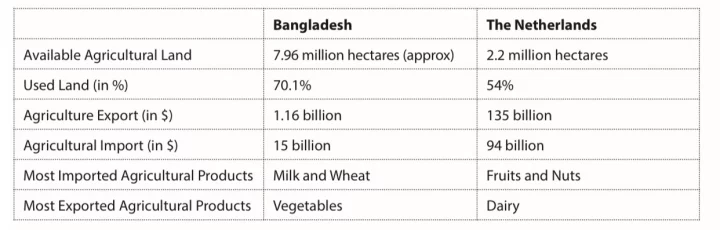
Let’s have a look through the table for a quick view at how Bangladesh agricultural sector differs from the Dutch one because of modern innovations and technologies.

IMG_2674

What is the current land area of the Netherlands, including the portion underwater, and how does their production capacity compare to that of Bangladesh?

The Netherlands is a relatively smaller country (41,850 km²) in western Europe, with 26% of its land (approximately 10,881 km²) situated under the sea level.

However, even though a larger portion of its land is underwater, this country still allocated 22.000 km² (2.2 million hectares) of land for agriculture. Using these lands and other necessary resources, the Netherlands produced 4 million cows, 13 million pigs, 104 million chickens, and nearly 24,000 acres of various crops and others. Such a phenomenal number of agro production was possible only because of their Smart Agro techniques and technologies.

However, the same cannot be said about the Bangladesh Agro sector. This nation has a total land area of 148,460 km² with 18,290 km2 of Bangladesh is underwater. Compared to the Netherlands, Bangladesh has more land area and available land for agriculture (79,600 km²). Yet, they fail to produce as many agro-products as the Dutch.

The nation produced 58.5 million tons of rice and other paddy, 14.07 million metric tons of milk, and 8.71 million metric tons of meat in 2023. Still they needed to import agro products worth $15 billion to fulfill the demand of the people of the country.

Discussion on the overall agricultural revolution of the Dutch

Referring to the “Dutch Agricultural Revolution”, the agricultural revolution in the Netherlands not only played a significant role in the country’s overall economic development but also contributed to world food production as a whole. Now, the Netherlands is the Second (2nd) largest agricultural exporter in the world.

However, the scenario was not always as such. During the “Golden Century” of the Netherlands, the population of the Capital grew from 30,000 to 200,000 within a short span of time. Such a dense population indicated that now the Dutch had more people to feed with limited resources, and therefore, they needed to find solutions for increased food production using the resources they had.

During the 17th and 18th centuries, the Dutch researched, invented, and developed more than a few agricultural techniques and technologies, like four-crop rotation, reaping machines, and others, to increase agricultural productivity and efficiency.

Here are some key aspects of the Dutch Agricultural Revolution:

Crop rotation and increased food production

Even though over half of the land in the Netherlands is used for agriculture, they still adopted the crop rotation technique to increase food production and simultaneously enhance the fertility of the soil.

Over the years, they developed a four-crop rotation to cut down the fallow period and increase soil fertility significantly. This technique increased food production (as all fields were used all year round) and enhanced feed for livestock. And when there was more food for livestock, the size of the herd and the production of meat, milk, and fertilizers also increased exceptionally.

Land reclamation and water management

A significant number of Dutch lands was and is still under the water. The Dutch people employed advanced techniques, like extensive impoldering, to reclaim these lands from the sea and inland water bodies for agricultural use. This innovative approach increased the amount of arable land available for agricultural use and hence, facilitated agricultural growth eventually.

In addition to using dikes, canals, and pumps, the nation also used windmills to pump water from agricultural land so that they don’t get affected by floods in any way.

Specializing in commercial agriculture

While increasing food production, the Dutch farmers also paid attention to cultivating high-value crops and livestock products that had high demand in urban markets and for export.

As this country has favorable weather conditions and enriched soil, the Government also aided the farmers with incentives and other facilities to enhance production efficiently. Besides fulfilling the nation’s demand, it also helped them to earn from abroad.

Research and technological innovations

Various technological and digital innovations played a great role in the Dutch Agricultural Revolution, and there is no doubt about that.

The nation invested enormous amount of time and money on Research & Development for their agricultural techniques and technologies. Many agricultural research institutions, including Wageningen University & Research (WUR), focused on innovating new agricultural tools and machinery, newer plant breeding, and sustainable farming practices to increase efficiency as well as productivity.

Besides embracing modern technologies and mechanization, the Netherlands also adopted greenhouse technology to revolutionize agro production. The use of greenhouses allowed the Dutch to cultivate crops all year round (fresh produce) and ensured a steady supply of fresh fruits and vegetables to both national and international markets.

What lessons can Bangladesh learn from the Dutch to effectively overcome their food challenge?

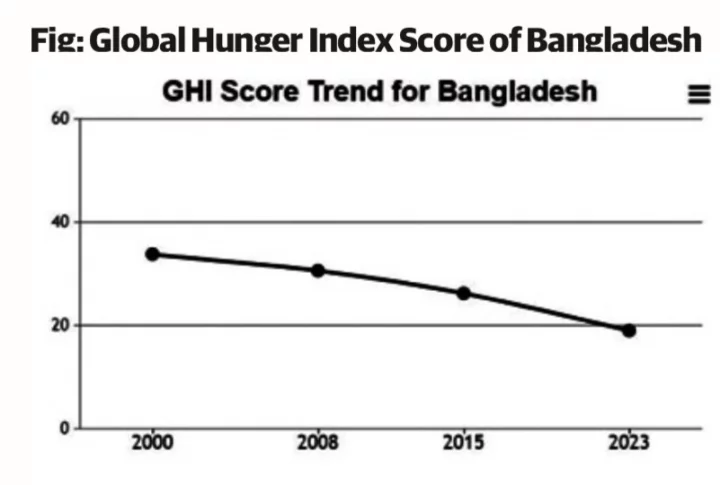
With the government’s support and the private sector’s investment, the agro sector of Bangladesh has shown remarkable progress over the last decade. With a Global Hunger Index of 19.0 in 2023, Bangladesh has now become a nation with a “moderate hunger rate,” while it was under a “serious hunger rate” just two decades ago.

IMG_2673

However, the nation is still not independent in food production. Bangladesh can learn a few things from the Dutch Agro System to effectively overcome its food challenges. Some of the lessons that the country can adopt from the Netherlands are:

Adopt advanced water management and land reclamation

Just like the Netherlands, a considerable amount of land in Bangladesh is also underwater. However, while the Dutch took land reclamation seriously, BD still needs to consider this technique to increase land for agricultural purposes.

The government and related parties can launch land reclamation and water management projects (especially in flood-prone areas and coastal regions) to increase arable land. Advanced irrigation techniques and water management practices can be developed for efficient irrigation infrastructure, ensure water availability throughout the year, and improve agricultural productivity like never before.

Invest in technological innovations

Although the Government of Bangladesh has allocated a huge budget for agricultural innovations and research & development, the nation needs to facilitate modern farming equipment and machinery to achieve the Dutch level of food independence. Advanced agricultural technology and infrastructure, like improved plows, seed drills, threshers, and greenhouses can boost efficiency and productivity in the near future.

Promote greenhouse farming

Even though Bangladesh doesn’t suffer from extreme weather conditions, introducing greenhouse farming can be beneficial. Greenhouses can protect the crops from pests and other weather conditions, hence, increasing quality as well as production.

Ensure financial support and risk management

Unlike the Dutch, Bangladesh farmers don’t enjoy easy and accessible credit facilities to invest in their farming. The government of Bangladesh should provide comprehensive farming credit facilities so that the farmers can adopt modern farming practices and technologies for efficiency. Introduction of crop insurance extensively can be a key initiative in this sector.

How can Bangladesh be independent in food production and supply?

Bangladesh holds the 14th position globally for the production of primary crop commodities, with a production of 93.3 million tons in 2021.

However, even after producing such a large volume, the nation is still unable to meet the food demand of the people and requires importing food from around the world. But importing means spending a large amount of dollars, which isn’t right for the economy as a whole.

Here are a few ways that Bangladesh can adopt to become independent in food production and supply:

Enhancing agricultural productivity is the key

One of the primary ways to achieve self-dependency in food production is by simply increasing agricultural productivity. Using improved, disease-resistant, and climate-resilient seeds, adopting modern farming techniques, and enhancing irrigation infrastructure can increase agro production significantly.

However, root-level farmers won’t be able to implement such things. The government of Bangladesh and the related parties should take the initiative to provide all the necessary resources to increase food production efficiently.

Adopting sustainable farming practices helps. Sustainable farming techniques like planting diversified crops and integrating plants and shrubs into agricultural land can reduce the risk of crop failure and improve soil health for enhanced production. By ensuring the best practices on the agro farm, Bangladesh can increase the food production and ensure adequate supply.

Implementing smart agro practices can enhance food production

The nation can also become self-dependent on food production by applying various advanced digital technologies and practices in its agricultural operations. Digital practices like internet connectivity, electricity, and proper devices not only give greater control over production processes but also increases efficiency, productivity, sustainability, and profitability significantly.

Allocating more of the budget to the agro sector in Bangladesh

The government of Bangladesh needs to allocate more of its budget to the agro sector to accelerate growth and increase food production than ever before. Even though the government has allocated Tk43,700 crore as agro budget (5.7% of the total budget) with a subsidy allocation of Tk17,533 crore in FY2023-24, they need to make sure that the money is spent right. Providing affordable fertilizers, better seeds, improved irrigation facilities, and other essential materials to the farmers can help the farming process and eventually increase crop production.

Spending more on research and innovation

The importance of research and innovation in Bangladesh’s agro sector is inevitable. Researching and inventing newer technologies, climate-resilient crops, and sustainable agricultural practices can pave the way for the nation to achieve food independence in the near future.

To fuel the research in the agro section, the government of Bangladesh has allocated BDT 16,336 crore for R&D in the agricultural sector so that they can try better and quicker farming techniques for enhanced food production.

Building better roads and highways

Investing and increasing crop production won’t alone bring food independence to Bangladesh. To make the nation self-dependent on food, better roads and highways need to be built all over the country. Improved communication all over the region would definitely make it easier to transport food to every corner of the nation.

Wrapping up

The agricultural sector is crucial to Bangladesh’s economy, but the country still needs an “Agricultural Revolution” similar to the Netherlands to achieve a zero-hunger rate.

Undoubtedly, Bangladesh has improved and increased its agro sector by adopting and implementing newer innovations and technologies. However, the nation’s progress in agriculture still requires significant innovation to reduce dependency on food imports.

By following the agro model of the Dutch, Bangladesh can surely walk towards food independency in the near future. Besides implementing crop rotation, better land and water management Bangladesh must increase investment in agricultural research, promote modern farming techniques, and ensure better infrastructure and financial support for farmers. By adopting these strategies, Bangladesh can achieve sustainable development and greater food security.

Ahmed Shoyeb Iqbal is head of operations at Dhaka Tribune.

উত্তরার জসীমউদ্‌দীনে ডোমিনোজ পিৎজার ৩৪তম শাখা উদ্বোধন

উত্তরার জসীমউদ্‌দীনে ডোমিনোজ পিৎজার ৩৪তম শাখা উদ্বোধন

উত্তরার জসীমউদ্‌দীনে ডোমিনোজ পিৎজার ৩৪তম শাখা উদ্বোধন:

রাজধানীর উত্তরার জসীমউদ্‌দীনে জি কিউ শেফালি টাওয়ারে ডোমিনোজ পিৎজার ৩৪তম শাখা উদ্বোধন করা হয়েছে।

এ উপলক্ষে পিৎজাপ্রেমীদের বিশেষ ছাড় দেওয়া হয়েছে।

আজ সোমবার পর্যন্ত নতুন ক্রেতাদের প্রথম অনলাইন অর্ডারে ৪০ শতাংশ পর্যন্ত ছাড় দেওয়ার ঘোষণা দিয়েছে ডোমিনোজ পিৎজার জসীমউদ্‌দীন শাখা।

ডোমিনোজ পিৎজার জসীমউদ্‌দীন শাখায় মুখরোচক ভিন্ন ভিন্ন স্বাদের পিৎজার পাশাপাশি ওরিগ্যানো রাইস, সসি অ্যান্ড মেসি পিৎজা, বিভিন্ন ধরনের গার্লিক ব্রেডসহ বেশ কিছু মুখরোচক খাবার পাওয়া যাবে, যেমন ভক্তদের পছন্দের চকো লাভা ডিলাইট।

উদ্বোধনী অনুষ্ঠানে উপস্থিত ছিলেন ডোমিনোজ পিৎজার এশিয়া অঞ্চলের ইন্টারন্যাশনাল বিজনেস ম্যানেজার গাওয়াইন ওং, প্রজেক্ট লিড, ইন্টারন্যাশনাল অ্যানালিটিকস অ্যান্ড ইনসাইটস নোয়েল সুং, ইন্টারন্যাশনাল অপারেশনস সিওই আলেসান্দ্রো কারাসহ ডোমিনোজ পিৎজার আন্তর্জাতিক প্রতিনিধি ও দেশীয় কর্মকর্তারা।

ডোমিনোজ পিৎজার এশিয়া, মিডল ইস্ট ও আফ্রিকার ভাইস প্রেসিডেন্ট অব ইন্টারন্যাশনাল বিজনেস উইকিং নং এক বার্তায় বলেন, ‘বিশ্বের বৃহত্তম পিৎজা ব্র্যান্ড হিসেবে বাংলাদেশের ভক্তদের কাছে সুস্বাদু পিৎজা পৌঁছে দিতে আমরা কাজ করে যাচ্ছি।

এশিয়া অঞ্চলভুক্ত দেশগুলোর মধ্যে বাংলাদেশের বাজারে ডোমিনোজ পিৎজা খুব দ্রুত বিস্তৃতি লাভ করছে। ক্রেতা ও ভক্তদের ভালোবাসা আমাদের এই সাফল্যের সূত্র।’

গাওয়াইন ওং এই ব্যবসা সম্প্রসারণে উচ্ছ্বাস প্রকাশ করে বলেন, ‘বাংলাদেশে আমাদের সম্মানিত গ্রাহকদের জন্য যেকোনো উৎসব থেকে শুরু করে নিত্যদিনের আড্ডায় পিৎজা, সাইড মেনু, রাইস ও ডেজার্টের বিস্তৃত সমাহার আয়োজন করতে পেরে আমরা আনন্দিত। আন্তর্জাতিক গুণগত মান ও সেবার নিশ্চয়তা দিতে আমরা অঙ্গীকারবদ্ধ এবং আরও বেশি মানুষের মুখে হাসি ফোটাতে আমরা সারা দেশে ব্যবসা সম্প্রসারণ করে যাচ্ছি।’

ডোমিনোজ পিৎজা বাংলাদেশের চিফ অপারেটিং অফিসার:

আহমেদ শোয়েব ইকবাল বলেন, ‘দেশের প্রতিটি আবাসিক ও বাণিজ্যিক এলাকায় ডোমিনোজ পিৎজার শাখা চালুর লক্ষ্যে এগিয়ে যাচ্ছি।

জসীমউদ্‌দীন রোডে নতুন শাখা উদ্বোধনের মাধ্যমে এই যাত্রায় আমরা আরও একধাপ এগিয়ে গেলাম।

বাহারি স্বাদ, দ্রুত ডেলিভারি আর সাশ্রয়ী দামে বিশ্বমানের পিৎজার অভিজ্ঞতা নিশ্চিত করে ভক্তদের মন জয় করে নিয়েছে ডোমিনোজ পিৎজা।

আমাদের প্রত্যাশা, এখন আরও বেশি ক্রেতা ডোমিনোজ পিৎজার সুস্বাদু খাবারের সঙ্গে নিজেদের প্রিয় মুহূর্তগুলো স্মরণীয় করে রাখবেন।’

বর্তমানে ঢাকা, চট্টগ্রাম, খুলনা, কক্সবাজার ও নারায়ণগঞ্জ—এই পাঁচটি বড় শহরে ডোমিনোজ পিৎজার শাখা আছে।

আজ থেকে সিলেট শহরেও যাত্রা শুরু করতে যাচ্ছে ডোমিনোজ পিৎজা।

ডোমিনোজ পিৎজা বাংলাদেশ বর্তমানে সরাসরিভাবে ৬০০ মানুষের কর্মসংস্থান করছে।

বিশ্বের অন্যতম বৃহৎ পিৎজা কোম্পানি ডোমিনোজ পিৎজা প্রতিষ্ঠিত হয় ১৯৬০ সালে।

৯০টির বেশি দেশের বাজারে ২০ হাজার ৯০০টি দোকান পরিচালনাকারী এই ব্র্যান্ড বিশ্বের শীর্ষ পাবলিক রেস্টুরেন্টগুলোর তালিকায় অন্যতম।

‘ডোমিনোজ পিৎজা বাংলাদেশ’ শীর্ষক অ্যাপের মাধ্যমে গ্রাহকেরা ঘরে বসেই সহজে পিৎজার অর্ডার করতে পারবেন।

এ ছাড়া m.dominos.com.bd ওয়েবসাইট থেকে সরাসরি অর্ডার করা যাবে। ১৬৬৫৬ নম্বরে কল করেও অর্ডার দেওয়া যাবে।

Meena Bazar Brand, and Meena Bazar's eCommerce Strategy With Ahmed Shoyeb Iqbal, GM, Brand, Communication, and Business Development, Meena Bazar

Meena Bazar Brand, and Meena Bazar’s eCommerce Strategy With Ahmed Shoyeb Iqbal, GM, Brand, Communication, and Business Development, Meena Bazar

Meena Bazar Brand, and Meena Bazar’s eCommerce Strategy With Ahmed Shoyeb Iqbal, GM, Brand, Communication, and Business Development, Meena Bazar

SSL credit banner

Ahmed Shoyeb Iqbal, General Manager of Brand, Communication, and Business Development, Meena Bazar, on Meena Bazar’s brand and communication strategy, Meena Click and Meena Bazar’s eCommerce ambition, digital payment, the business of retail, and the art of marketing and communication.

Future Startup

Thank you for agreeing to do this interview. What is your background and what are you working on?

Ahmed Shoyeb Iqbal

I have been working at Meena Bazar for almost nine years now. Previously, I worked at Grameenphone. After leaving GP and before joining Meena Bazar, I went to the UK to do my MBA from the University of London where I studied Marketing Management. I returned in 2009 and joined Meena Bazar.

Meena Bazar, a relatively smaller retail chain at that time, was at the beginning of a new phase. The company had already conceived an expansion plan.

Although I studied Marketing Management, initially, I joined in a different role in the training and development department as Manager, Training, and Development.

We had about seven outlets at that time. Overall supermarket business was a nascent concept in Bangladesh. In fact, the age of supermarket business in Bangladesh is about 18 years. The people with domain expertise in supermarket business was in short supply. Hence, training and development was an important department for Meena Bazar in order to scale the business.

The department was responsible for preparing and improving the skills of salespeople and store managers, which was particularly critical during that formative phase.

Since I had foreign exposure and a degree in Marketing Management, I used to train staff and store managers on customer service, developing customer service framework, working on different modules and other relevant aspects.

After working for a year in that department, I moved to my core function which is brand and communication. I started as Manager, Brand, and Communication for Meena Bazar. Currently, I look after the Brand, Communication and Business Development as General Manager.

I work with different vendors such as Pran, Unilever, GSK, Shajeeb, and others to launch joint promotional campaigns.

Most of the promotions that you see from us, such as 10% discounts on a particular product or 5% on another, these are not our promotions per se, these discounts come from our vendor partners. We ensure that it reaches to our customers so that they purchase these products.

One of my responsibilities is to bring these sorts of communications by working with our partners.

Generally speaking, we have two priorities at brand and communication department at any given time. One is to increase footfalls in our stores which means growing the number of customers visiting our outlets daily; and secondly, increasing the basket size of our existing customers through offers and promotional campaigns.

Apart from regular communication works, we also look at how we can build the lasting relationship with our customers. Over the past years, we have successfully introduced Meena Bazar Club Card, a membership platform for Meena Bazar customers where we currently have over a hundred thousand members. We launched it in 2012. It has been growing consistently since then.

We also launched Meena Bazar website, www.meenabazar.com.bd, in 2012. We were the first grocery chain in the country to launch a fully dynamic e-commerce website in Bangladesh. Our ecommerce endeavor has evolved over the years. Recently, we’ve rebranded our ecommerce platform to www.meenaclick.com.

Besides Meena Bazar, our parent company, Gemcon Group, operates another retail chain called Gourmet Bazar. I and my team also look after the branding and marketing of it.

We have two Gourmet Bazar outlets: one at Banani and another at Gulshan. Both of the outlets are very well received. Our Banani Gourmet Bazar has a community-centric positioning. We have been able to establish it as an event-based, community-centric outlet. It has a nice coffee section, a grocery section and it attracts different types of people. On the other hand, our Gulshan branch has made its mark as a premium grocery shop.

These are some of the things that we do. Apart from these, there are regular campaigns and promotional activities. There are a lot of events these days that warrant for our attention. We also run event-specific promotional campaigns.

As a supermarket, we sell products of other brands. We do have some home brand or private label brands such as tissue, water, and a few others, but mostly we aggregate brands. Bring them under one roof and in the process offer convenience to our customers. Consequently, when it comes to communication, we often require to walk a tightrope and find a balance that serves my purpose as well as delivers the result.

Digital Disruption and Its Impact on Business

Digital Disruption and Its Impact on Business

Digital Disruption and Its Impact on Business:

By Ahmed Shoyeb Iqbal

Imagine you are in a super shop queue to pay for the things you bought. Did you ever notice all the products you buy from a super shop are scanned by a bar code reader? Super shops use barcodes to keep track of all in-stock and out-stock products and quickly generate the invoice and checkout. The benefit of using a barcode is if a product is less than a certain number, for example, 10, a notification or alert message will directly go to the manufacturer to send over the product before it stocks out. Amazing, right?
This is just one example of digital disruption that’s happening around us. If you look carefully, you’ll notice a lot of such examples. From super shops to the telecom industry, garments sector, mobile banking, digital payment platform, you name it, you see it! Like with time, the human race is evolving, and we’re moving towards a digital future. And digital disruption is one of the first steps towards moving to a digital future! By definition, digital disruption is an effect that changes the expectation and the operations in an industry, market, or process caused by digital assets and capacities.

Digital disruption might be helpful or harmful depending on the type of business and other associated factors; while some companies can be benefitted, others can be affected. And it is applicable for both SMEs and big players. The main game is when you can take advantage of the disruption and act accordingly.

So, if you are an entrepreneur looking for ways to save your business from digital disruption, or you are here to know how you can take advantage of this disruption, then you are at the right place!


Traditional vs. Digital business model

Before we jump into the advantages of disruption, let’s look at different types of business models first. For an entrepreneur, it is tough and challenging to run a business. But for now, I would want you to take a minute and imagine being a customer. Keeping in mind the current pandemic situation, you would like to shop, order, even pay bills online, right?
So, if you go back to being an entrepreneur, which business model would you prefer? I hope you have found the answer to your question!
Traditional Business Model
Organizations with any kind of office setup and selling products and services through physical stores fall under Traditional Business Model. In a traditional business model, the role of manufacturer, distributor, and the retailer is significant. Here, B2B and B2C models are followed to make the business smooth.